TL;DR: People do not read a brewery website. They check four things: what is pouring, are you open, is there food, and can I bring the dog. Build for those four and the rest can be as pretty as you like.
We build a lot of sites for places that serve people, and breweries have a problem most of them do not: the single most important piece of content changes every week and nobody has time to update it.
The tap list is the product page
Whatever else is on your site, the tap list is what people came for. It has to be current, and current means somebody who is not a developer can change it in two minutes from a phone behind the bar.
Three things make that work:
- A dead simple editor. If updating the tap list requires a laptop and a login nobody remembers, it will not happen.
- A visible last-updated date. "Updated Thursday" is honest. A stale list with no date is a small lie that costs you a customer who drove over for something you tapped out of a week ago.
- A sensible empty state. If the list has not been touched in ten days, say so rather than presenting old information as current.
If you genuinely cannot maintain it, do not build it. Link your Untappd or whatever you actually keep current instead. An accurate outbound link beats a stale page you own.
The age gate, done properly
You need one. Implemented carelessly it will quietly damage your search visibility.
The failure is blocking the page server-side, or bouncing to a separate gate URL, so a crawler asks for your tap list and receives a door. You have effectively told Google your site is one page that asks how old someone is.
Do it this way:
- Render the real page in the HTML
- Overlay the gate client-side
- Remember the answer so nobody is asked six times in a session
- Never redirect to a separate gate URL
Test it by fetching your own page the way a crawler would rather than looking in a browser, because the browser runs the JavaScript the crawler will not. If the content is not in the response, fix that before anything else on this list.
And a matter of taste rather than law: a date-of-birth spinner on a phone is miserable. A single yes or no is legally equivalent in most places and far less annoying.
Hours, and the honest version of them
Brewery hours are unusually complicated. The taproom, the kitchen, and the bottle shop often keep different ones, and all three change for events.
Put all of it in one block, and be specific about the thing that ruins evenings: whether the kitchen closes before the bar. Someone arriving at 9pm hungry and finding the kitchen shut at 8 is a one-star review with a real grievance behind it.
Your Google Business Profile hours matter more than the website's for this, because that is what people check on the way over. Set holiday hours in advance rather than on the morning.
Answer the dog and the kids question
Two questions decide whether a group comes to you or the place down the road, and most brewery sites answer neither.
Are dogs allowed, inside or only on the patio. Are children allowed, and until what time. Say it plainly on the homepage. A family of four deciding at 5pm on a Saturday will pick the taproom that told them.
While you are there: parking, whether you take cards only, and whether there is a food truck tonight.
Events are a calendar, not a paragraph
Trivia, live music, releases, run club. These drive midweek traffic and they belong in a real calendar with real dates, not a paragraph that says "check our Instagram".
Mark them up with structured data so they can appear in search results as events. This is one of the few places where schema still earns a visible feature.
If you distribute, that is a different page
If your beer is in shops and bars, people will search for where to find it, and that is a genuinely different intent from visiting the taproom.
Give it a page. Which accounts carry you, by area, kept honest. If you cannot keep a live list current, name the chains and the specific bottle shops and put a date on it. A short accurate list beats a broken map.
Your beers deserve pages, not a paragraph
If you have a core range, each beer is worth its own section with a stable anchor. Style, ABV, what it actually tastes like in plain words rather than tasting-note poetry, and whether it is available right now.
Two reasons. People search beer names, especially after trying one somewhere else and wanting to know who makes it. And a beer with its own anchor can be linked from your tap list, from an event, and from a distributor page without you rewriting the description three times.
Say the ABV plainly. It is the single most common thing a customer wants to know and the most commonly buried.
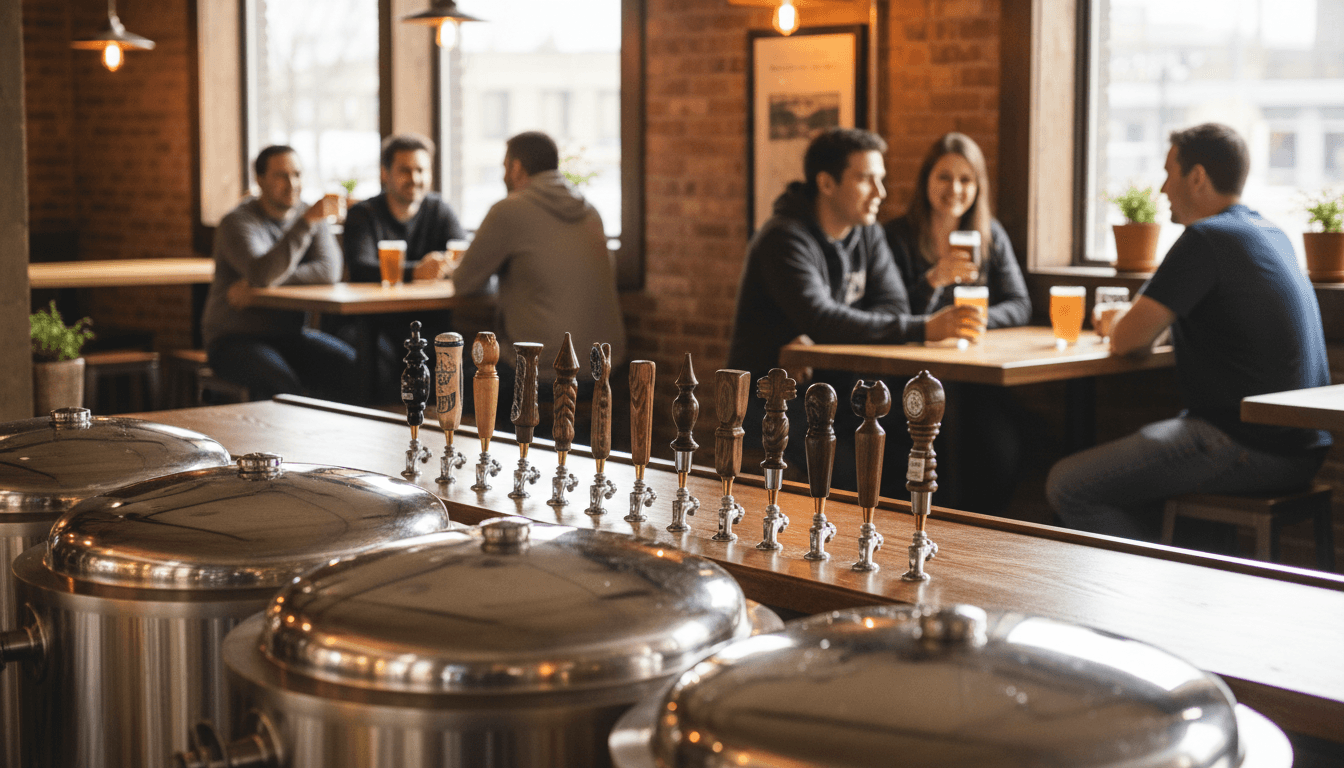
Photograph the beer and the room, not the equipment
Everyone photographs their fermenters. Customers do not care about fermenters.
They care what a pint looks like, what the room feels like on a busy Friday, and whether there is somewhere to sit outside. Shoot those. Then compress them, because a brewery site is mostly photography and that is exactly how it ends up slow. The reasoning is in why page speed matters.
The kitchen deserves its own answer
If you serve food, decide whether you are a brewery with food or a restaurant that brews, and build accordingly.
If it is a full kitchen, you need a real menu page, not a PDF. A PDF is unreadable on a phone, invisible to search, and impossible to keep current. Menus as real pages can be updated in minutes and can be understood by Google.
If it is a rotating food truck, that belongs on the homepage with tonight's truck named, and it belongs in your calendar. "Food truck tonight" with no name is worse than nothing, because the person deciding wants to know whether it is tacos.
If there is no food but you allow outside food, say that loudly. It changes the plan for a group of six.
Merch, gift cards, and the money you leave on the table
Two small pages earn more than most brewery sites expect.
Gift cards convert in December and around birthdays, and someone searching for one at 9pm cannot buy it from a page that says to come in. Even a simple purchase link is enough.
Merch is the same story. You do not need a full store. A page showing what exists, with prices, and either an online buy or an honest "available at the bar" beats hiding it entirely.
Neither of these needs to be sophisticated. They need to exist and be findable.
What we would build, in order
- Tap list, editable from a phone, with a visible updated date
- Age gate that overlays rather than blocks
- Taproom, kitchen and shop hours in one block
- Dogs, kids, parking, payment, answered on the homepage
- Event calendar with structured data
- A where-to-find-us page if you distribute
- Photography of the beer and the room, properly compressed
Most brewery websites are built once and then rot, because the one thing that needed to stay current was the hardest thing to change. Fix that and the rest looks after itself.
If you run a taproom and want one, we build these.